
Dominate Social Media with Expert Social Media Management in the Philippines
Social media management in the Philippines means strategically planning, producing, publishing, monitoring, and optimizing a brand’s presence across platforms for over 86 million active Filipino users — the primary channel where Filipino consumers discover, evaluate, and buy from brands.
Social media management in the Philippines has moved well beyond scheduling posts and counting followers. The Philippine social media landscape now reaches over 86 million active users, making it one of the most penetrated social media markets in Southeast Asia and a primary channel where Filipino consumers discover, evaluate, and buy from brands.
Managing that presence effectively requires more than creative output. It demands a structured social media analytics strategy, real-time listening capability, and a clear understanding of which platforms and content formats are actually driving business outcomes.
This article covers the full scope of social media management for Philippine businesses: what it involves, how analytics and social listening fit in, when to outsource social media management, and how to choose the right partner to execute it all.
What Social Media Management Actually Involves
Social media management is the end-to-end process of planning, producing, publishing, monitoring, and optimizing a brand's presence across social platforms. It covers content creation, community engagement, paid amplification, crisis response, and performance analysis.
For Philippine businesses, it also means understanding the nuances of local audience behavior: peak engagement windows, regional language preferences, platform-specific content norms, and the cultural context that shapes how Filipino audiences respond to brand communication.
Content Creation and Publishing
Content creation is the most visible layer of social media management, but it only performs when grounded in strategy. High-performing content in the Philippine market tends to be visually rich, conversational in tone, and built around clear audience value rather than brand messaging alone.
One of the fastest-growing approaches in this market is user-generated content. Reviews, testimonials, unboxing videos, and customer photos carry authenticity that brand-produced content cannot replicate, and Filipino audiences engage more readily with peer voices than with polished brand material.
Structured UGC marketing strategies go beyond simply reposting customer content. They involve building systems to source, curate, and amplify content in ways that feel organic, reinforce brand positioning, and drive measurable engagement outcomes.
Strategy Development
A well-defined strategy is the operational backbone of effective social media management. It means setting measurable objectives, mapping content to audience segments, selecting the right platforms for each goal, and building content calendars aligned with broader business priorities.
Strategy also means staying current with social media analytics trends 2025 such as short-form video dominance, social commerce integration, and AI-assisted content personalization, all of which are actively reshaping how brands compete for attention in Philippine feeds.
Analytics and Reporting
Performance analysis is what separates managed social media from random posting. Social media analytics reporting tracks engagement rates, reach, click-through rates, conversion attribution, and audience growth to surface what content is working and what is draining budget without return.
Without structured social media reporting services, it is nearly impossible to make confident decisions about where to invest content production time, which platform deserves more budget, or how to improve a campaign mid-flight.
The most frequent social media analytics mistakes come from tracking vanity metrics like raw follower count or total impressions without connecting them to conversion, revenue, or audience quality. Fixing this starts with building the right measurement framework from the outset.
Why Social Listening Is Now Central to Social Media Management
Social listening is now central to social media management because Filipino consumers express opinions, complaints, and purchase decisions publicly in real time — brands that monitor and respond to these signals consistently outperform those relying on reactive monitoring alone.
Publishing content is only half the job. The other half is monitoring what your audience is saying about your brand, your competitors, and your category, and acting on those signals before they become problems or missed opportunities.
Understanding the power of social analytics means recognizing that social platforms are not just broadcast channels. They are real-time research environments where Filipino consumers express opinions, raise complaints, share recommendations, and make purchasing decisions publicly.
Real-Time Monitoring
A strong social listening real-time capability means tracking brand mentions, hashtags, competitor activity, and trending conversations as they happen, not after a weekly reporting cycle has closed. For Philippine brands, where a single viral post can define a news cycle within hours, speed of awareness and response matters significantly.
Brands that invest in social listening customer experience programs consistently outperform those that rely on reactive monitoring. They identify service issues earlier, respond to negative sentiment before it escalates, and amplify positive organic content while it still has momentum.
Choosing the Right Analytics Platforms
Selecting the right social media analytics platforms depends on your brand's scale, the depth of insight required, and your internal team's capacity to work with data. Enterprise platforms offer sentiment analysis, influencer tracking, and competitive benchmarking that native platform tools cannot provide.
Measuring social media analytics effectiveness starts with asking whether your tools connect social signals to business outcomes. Platforms that only surface engagement data without conversion attribution or CRM integration limit the strategic value of your entire analytics investment.
If the selection and implementation process feels overwhelming, working with a dedicated social media analytics consulting partner helps businesses choose, configure, and extract value from these tools without burning internal resources on technical setup.
Applying Social Listening Across the Customer Journey
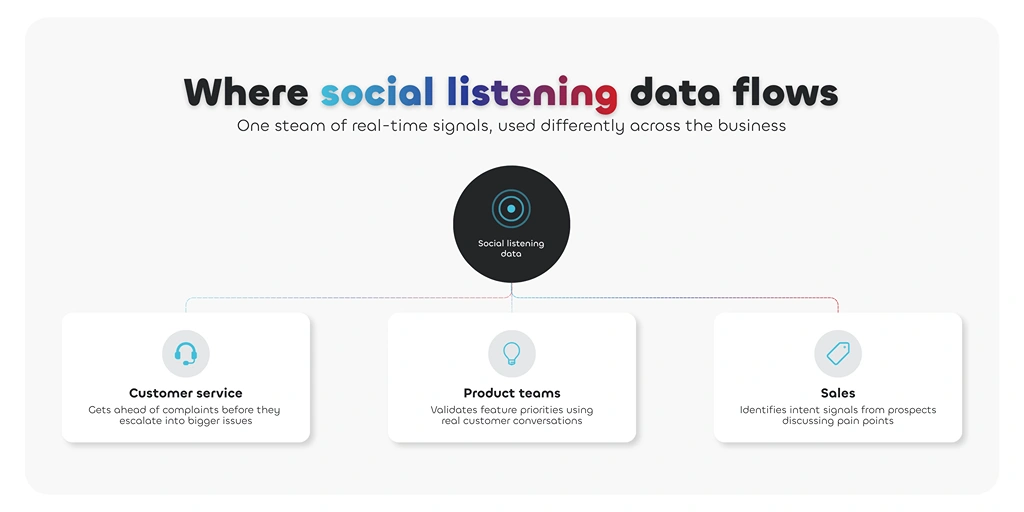
Social listening data is most valuable when it flows beyond the marketing team. Customer service can use it to get ahead of complaints before they escalate. Product teams can use it to validate feature priorities. Sales can use it to identify intent signals from prospects discussing pain points in your category.
For a look at how Philippine brands have applied this in practice, the social listening case studies collected by Kpability show the difference that structured listening programs make on customer retention and brand sentiment scores.
If you are new to this discipline, a good starting point is the social listening FAQ, which covers how real-time monitoring is set up, what data sources are available, and what a typical social listening program looks like for a mid-sized Philippine brand.
The Case for Outsourcing Social Media Management
Building an in-house team capable of covering strategy, content production, community management, analytics, and reporting is expensive and slow to scale. Many Philippine businesses are finding that choosing to outsource social media delivers faster results and a stronger return on investment than building all these capabilities internally.
Benefits of Outsourcing
The core outsourcing social media benefits include access to a cross-functional team of specialists, established workflows and tools, and an outside perspective that is harder to maintain when internal teams are too close to the brand.
Outsourcing gives you operational flexibility: the ability to scale activity up during campaign peaks and reduce it during quieter periods without carrying fixed headcount costs year-round.
For businesses that already have strong in-house content teams but lack analytical depth, the option to outsource social analytics specifically brings in dedicated analysts without hiring full-time, making it one of the most cost-efficient ways to elevate reporting quality immediately.
What a Full-Service Outsourced Engagement Includes
A comprehensive outsourced social media arrangement covers content strategy and production, community management, paid social campaign management, and structured analytics reporting services that give the client complete visibility into performance without having to interpret raw data themselves.
Strong outsourced partnerships also deliver reporting and analytics services in formats that work at the executive level. Clear KPI frameworks, regular reporting cadences, and plain-language summaries of what the data means and what should happen next are hallmarks of a mature agency engagement.
Common Mistakes When Managing Social Media In-House
In-house teams, especially at SMEs, tend to repeat the same social media mistakes: inconsistent posting schedules, content that does not match platform format norms, insufficient testing of creative variations, and a lack of process around audience segmentation.
Without structured web and social analytics, it is difficult to know which content is actually driving conversions versus which generates surface-level engagement that does not connect to revenue. This blind spot consistently leads to budget misallocation.
Choosing the Right Social Media Partner in the Philippines

Finding the right social media partner Philippines requires evaluating more than a portfolio. The right partner needs to understand your industry, your specific audience, and the platform behavior and cultural context unique to this market.
What to Look for During Partner Selection
Strong social media partner selection criteria include: demonstrated results in your category or adjacent industries, platform-native expertise rather than generic digital marketing experience, transparent reporting standards, and a team structure that gives you consistent senior strategic access.
Look at how the agency manages its own social presence. A partner who cannot maintain credible content and engagement on their own channels is unlikely to do it effectively for yours.
Questions to Ask Before Signing
Before committing to a partner, use the evaluation process to ask about the following:
- Analytics approach: What platforms do they use? What KPIs do they prioritize? How do they connect social performance to revenue metrics?
- Reporting cadence: How often do you receive reports and in what format? Do reports include forward-looking recommendations?
- Social listening: Do they offer proactive real-time monitoring, or only react to mentions after the fact?
- Content ownership: Who retains rights to the content produced during the engagement?
- Crisis protocols: How do they handle a viral negative post or a fast-moving PR issue?
These questions reveal whether a prospective partner operates with process discipline or improvises under pressure, and that distinction has long-term consequences for brand reputation and campaign consistency.
Analytics and Reporting as a Standalone Service
Not every business needs fully outsourced social media management. Some brands have capable in-house content teams but lack the analytical depth to interpret their performance data and translate it into clear strategic direction. This is where standalone analytics consulting becomes valuable.
A dedicated analytics partner works alongside your existing team, building measurement frameworks, running regular performance reviews, and surfacing the insights that lead to smarter content and campaign decisions without the overhead of a full-service retainer.
What Strong Reporting Looks Like
Good social media analytics reporting is not a document of charts. It is a clear narrative that explains what happened during the reporting period, why performance moved the way it did, and what the team should do differently in the next cycle.
Comprehensive social media reporting services include platform-level breakdowns, content type performance analysis, audience quality metrics, paid versus organic attribution, share of voice against competitors, and specific next-step recommendations, not just a summary of what already happened.
For businesses tracking both website and social performance together, web and social analytics integration connects social engagement data with site behavior and purchase records, building a complete picture of how social channels contribute to business outcomes beyond likes and shares.
Where Social Media Management Is Heading
The future social media marketing landscape is being shaped by several converging forces: the continued dominance of short-form video, the maturation of social commerce, AI-generated content at scale, and tighter algorithmic restrictions on organic reach across most major platforms.
For Philippine brands, this means that tomorrow's social media management will require stronger platform-specific strategies, deeper creator and community partnerships, and more rigorous measurement to prove ROI across an increasingly fragmented attention environment.
UGC and Creator-Driven Content
The shift toward creator and community content is accelerating on TikTok and Instagram, the two platforms where Filipino consumer attention is growing fastest. Audiences on these platforms engage far more with peer and influencer content than with polished brand production, making community-driven content a structural priority rather than a tactical experiment.
The most successful brands in this market are not just publishers but platform participants, actively cultivating the audiences and creators who amplify their message organically and extend their reach beyond what paid media alone can achieve.
Is Your Analytics Strategy Actually Working?
A consistent question for brands investing in social media is whether their analytics setup is giving them the right signals. Social media analytics effectiveness is not just about having data: it is about having the right data, connected to the right business outcomes, reviewed on a cadence that allows teams to act on what they find.
Brands that regularly audit their measurement frameworks and challenge their KPI definitions tend to outperform those that set metrics once and never revisit them. This is one of the clearest dividing lines between social media programs that grow and those that plateau.
FAQs About Social Media Management in the Philippines
What does social media management include?
Social media management covers content strategy and production, community engagement, paid social campaign management, performance analytics, and crisis response. A full-service approach also includes regular reporting and strategic reviews tied to business objectives.
A full-service approach also includes regular reporting with KPI frameworks tied to business objectives — not just a document of charts, but a clear narrative of what happened, why performance moved the way it did, and what the team should do differently next cycle.
What are the benefits of outsourcing social media management?
The main benefits of outsourcing social media management are access to specialist expertise across content, strategy, and analytics; faster execution than building in-house; operational flexibility to scale activity up or down; and an outside perspective that helps break internal creative patterns.
How do I choose the right social media partner in the Philippines?
Effective social media partner selection involves evaluating industry experience, analytics capability, reporting transparency, crisis protocols, and team structure. Review case studies in your category, ask about their measurement frameworks, and verify that they offer proactive strategic guidance rather than just execution.
What is social listening and how does it improve customer experience?
Social listening is the practice of monitoring social platforms for brand mentions, sentiment signals, competitor activity, and category conversations in real time. Structured social listening programs allow brands to respond to issues before they escalate, surface product feedback organically, and build stronger audience relationships through timely and relevant engagement.
What metrics should I be tracking?
Track engagement rate, reach, click-through rate, conversion rate, share of voice, and sentiment alongside follower growth — always contextualized against business outcomes like traffic, leads, or revenue attributed to social channels, not raw impressions alone.
A strong social media analytics strategy tracks engagement rate, reach, click-through rate, conversion rate, share of voice, and sentiment alongside follower growth. Vanity metrics like raw impressions should always be contextualized against business outcomes such as traffic, leads, or revenue attributed to social channels.
What are the most common social media analytics mistakes?
The most frequent social media analytics mistakes include measuring engagement without tying it to conversion, treating all platforms with the same KPI framework, ignoring audience quality metrics in favor of quantity, and failing to build a consistent reporting cadence that allows for trend analysis over time.
How Kpability Can Help
Kpability works with Philippine businesses across retail, financial services, food and beverage, insurance, and logistics to design and execute social media programs that deliver measurable results. Our services span content and community management, social media analytics, social listening, and web and social performance reporting powered by enterprise-grade tools.
Whether you need to outsource your social media management entirely, supplement your in-house team with dedicated analytics support, or build a social media strategy from the ground up, we can help you plan, execute, and optimize across every channel.

Related posts
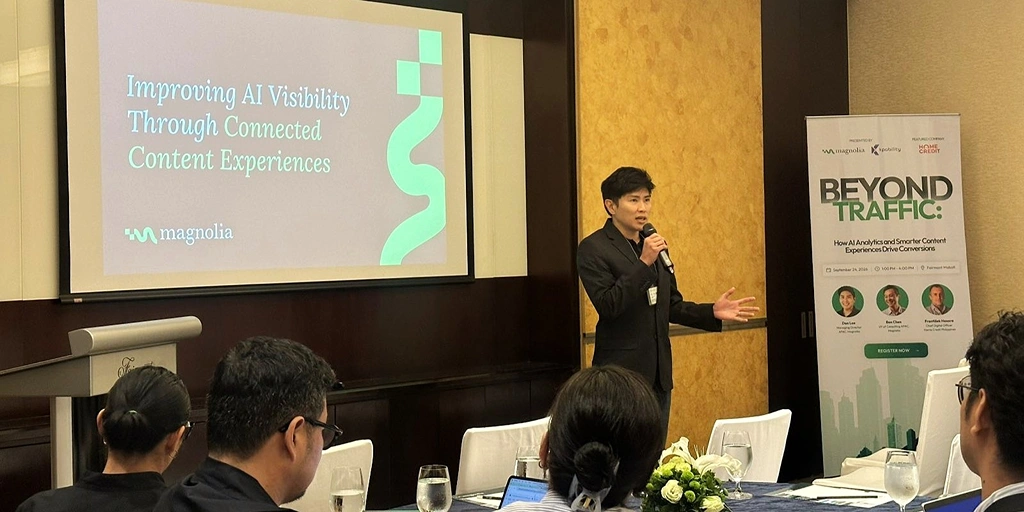
Beyond Traffic: Key Takeaways on AI Analytics, Content Experiences, and Digital Conversions
Beyond Traffic was an event hosted by Kpability and Magnolia on September 24, 2026, at Fairmont Makati, bringing…

Zoho CRM vs Odoo CRM: Which Is Better for Growing Businesses in 2026?
If you are comparing Zoho CRM and Odoo CRM, the short answer is this: Zoho CRM is the…

Odoo vs HubSpot: Which CRM Gives Growing Businesses More Value?
Odoo CRM is the better value for most growing businesses because its pricing stays predictable as teams scale…