
Leveraging Omnichannel Marketing Strategies for Consistent Customer Engagement
What Are Omnichannel Marketing Strategies and Why They Matter More Than Ever in 2026
In a digitally saturated world, customers no longer follow a straight line from awareness to purchase. They discover brands on social media, compare options on a desktop, ask questions through a chatbot, and complete the transaction in-store, sometimes all within the same day.
This behavior makes it essential for businesses to move beyond multichannel marketing, which operates in disconnected silos, and embrace omnichannel marketing strategies that weave every touchpoint into one continuous, seamless experience.
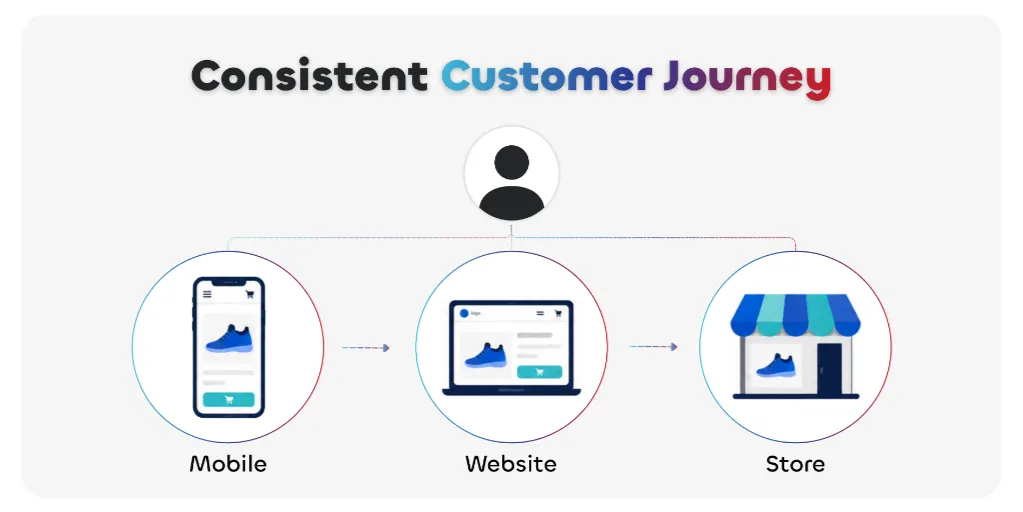
Omnichannel marketing strategies are built around creating a unified customer experience across all platforms, devices, and channels. They are not just about being present on different channels; they are about connecting those channels so customers can transition between them without friction, without repeating themselves, and without losing context.
The numbers behind this shift are significant. The omnichannel retailing market is estimated at USD 11.57 billion in 2026, projected to reach USD 29.30 billion by 2033, growing at a 14.2% CAGR. Global retail e-commerce is on track to hit $8.1 trillion by 2026, with over 21% of all retail sales happening online.
Companies with strong omnichannel marketing engagement retain more than 89% of their customers, compared to just 33% for those with weak cross-channel programs.
Simply put, omnichannel is no longer a strategic option; it is the operating standard for any brand that wants to compete in 2026 and beyond.
The Business Case: Benefits of Omnichannel Marketing
Understanding the benefits of omnichannel marketing is the foundation of any strategic investment in it. Here is what the data shows:
- Higher purchase rates. Omnichannel campaigns achieve a 287% higher purchase rate compared to single-channel campaigns. Brands deploying five or more coordinated channels see purchase rates up to 412% higher than single-channel efforts.
- Revenue growth. Companies with strong omnichannel strategies see 9.5% revenue growth, versus just 3.4% for weaker programs, nearly triple the rate.
- Customer retention. Businesses with omnichannel strategies see a 91% greater year-over-year customer retention rate than those without.
- Increased order value. Omnichannel shoppers spend an average of 13% more per order compared to single-channel buyers.
- Cross-channel revenue lift. When consumers spend $100 online and then visit a physical store within 15 days, they spend an additional $131. Offline presence genuinely lifts digital sales opening a brick-and-mortar store increases web traffic in the surrounding area by 37%.
- Consistency compounds. Organizations that maintain consistent cross-channel messaging for three or more consecutive years report a compounding 19.3% year-over-year revenue lift, while inconsistent messaging erodes brand equity by up to 11%.
These are the omnichannel engagement benefits that turn this strategy from a nice-to-have into a top-line priority.
The Role of the Omnichannel Messaging Platform
At the core of any effective omnichannel strategy is the right omnichannel messaging platform, the infrastructure that makes all channels work together as one.
An omnichannel messaging platform orchestrates synchronized customer experiences across email, SMS, WhatsApp, push notifications, web, in-app messaging, and social media.
It centralizes customer data, campaign management, and analytics so that when a customer interacts on any channel, the platform captures that behavior and uses it to inform the next interaction regardless of where it happens.
According to Infobip’s Messaging Trends Report 2026, which analyzed 628 billion mobile interactions and 3.8 trillion messages over the past 20 years, the landscape has shifted dramatically:
- SMS still accounts for 62% of traffic due to its reliability, but richer conversational channels are accelerating fast.
- RCS traffic grew 3x globally in 2025, with a 70x increase in North America alone.
- WhatsApp facilitates 91% of all conversational AI interactions, with a 25% year-over-year increase.
- Mobile push notifications reached a record 74.3% adoption rate with a 7.8% average click-through rate.
The report’s conclusion is clear: the era of the simple notification is over. The future of business messaging is omnichannel, conversational, and powered by Agentic AI. Key features to prioritize in an omnichannel messaging platform include:
- Unified inbox — all communications accessible in one place across all channels
- AI and automation — from generative response tools to full AI agents handling conversations autonomously
- Customer journey tracking — analytics that track and manage the full experience from first touch to conversion
- CRM integration — real-time customer data flowing into every interaction
- Real-time context sharing — agents and automated systems see the full conversation history instantly, regardless of the entry channel
A key 2026 benchmark: 86% of organizations report increased customer engagement after adding a new messaging channel through a properly connected omnichannel platform.
Omnichannel Messaging Trends Shaping 2026
Staying current with omnichannel messaging trends is critical because the channels and technologies customers prefer are shifting fast. Here are the defining trends for 2026:
1. Agentic AI and Autonomous Orchestration
- Artificial intelligence is no longer just a personalization layer; it is becoming the orchestration engine of the entire customer journey.
- Agentic AI can autonomously manage customer interactions, make real-time routing decisions, and trigger next-best actions across channels without constant human intervention.
- Platforms like Infobip’s AgentOS represent this next evolution. In 2026, 76% of customer interactions incorporate some form of AI-based personalization.
2. RCS and Conversational Channels on the Rise
- Rich Communication Services (RCS) is maturing rapidly, enabling brands to send rich, interactive messages through the default messaging apps on Android devices, no app download required. WhatsApp, Messenger, and integrated chat are now direct revenue channels, not just support tools.
3. Mobile as the Central Nervous System
- Mobile shopping represents 57% of global retail e-commerce sales and is expected to reach 62% by 2027. Any omnichannel strategy that does not treat mobile as its central nervous system is structurally incomplete. The average American checks their phone 144 times per day.
4. Social Commerce Integration
- The global social commerce market is projected to reach $2.9 trillion by 2026. TikTok Shop, Instagram Shopping, and Pinterest’s buyable pins are no longer just awareness platforms they are full purchase channels that must be integrated into the omnichannel flow.
5. Zero-Party Data Strategies
- With the deprecation of third-party cookies, brands must now collect data directly from customers through preference centers, quizzes, and interactive content. Zero-party data strategies have moved from a competitive advantage to a baseline requirement for effective omnichannel customer engagement.
6. Unified Commerce Architecture
- Unified commerce, where every channel has real-time access to the same inventory, order, and customer data, is transitioning from a roadmap item to a table-stakes requirement. Campaigns should never promote out-of-stock items, and personalization should only recommend products that can actually be fulfilled.
Omnichannel Messaging Strategy: A Step-by-Step Framework

Building a scalable omnichannel messaging strategy requires deliberate planning. Here is an updated framework for 2026:
Step 1: Develop Detailed Customer Personas
- The foundation of omnichannel customer engagement is understanding who your customers are. Build personas using demographic, psychographic, and behavioral data, but in 2026, layer in channel preference data.
- Where does each segment spend its time? Do they respond better to WhatsApp, SMS, email, or push? B2B buyers now engage with an average of 10+ channels during their buying journey; understanding which channels map to which intent stages is essential.
Step 2: Centralize Customer Data and Resolve Identities
- An omnichannel strategy lives or dies on a unified customer view. This means integrating data from social media, email, in-store visits, app usage, and service interactions into a single customer profile and solving the identity resolution problem.
- A customer who browses on mobile, adds to cart on desktop, and purchases in-store must be recognized as one person, not three. Use a CDP (Customer Data Platform) or a CRM combined with deterministic and probabilistic identity matching.
Step 3: Map the Customer Journey with Friction Points
- Visualize every typical path your customers take, from initial awareness to post-purchase loyalty. Identify the specific points where context is lost, where customers have to repeat themselves, where the messaging contradicts itself, or where they drop off entirely. These friction points are your highest-priority opportunities.
Step 4: Establish Consistent Cross-Channel Messaging
- Consistent cross-channel messaging is the core discipline of omnichannel brand building. Every channel, email, social media, SMS, in-store displays, and chat must communicate the same brand voice, values, and campaign narrative.
- Tailor the format and tone to fit each platform’s norms, but never let the underlying message diverge. One seasonal campaign, for example, should present a unified theme: social media builds anticipation, email delivers personalized offers, in-store visuals reinforce the creative, and SMS drives time-sensitive urgency.
- Organizations that sustain consistent cross-channel messaging report 14.6% higher year-over-year revenue compared to those with fragmented messaging.
Step 5: Build Personalized, Dynamic Content Flows
- Personalization in 2026 is not just a nice touch; it is a conversion driver. When given personalized choices, 80% of consumers are more likely to make a purchase.
- Use behavioral data, purchase history, and channel preference signals to deliver messages that feel individually crafted. Dynamic content that adjusts in real-time based on user data ensures customers see the most relevant offer, product, or message at the right moment on the right channel.
Step 6: Integrate AI-Powered Automation
- Map out which parts of the customer journey can be handled autonomously, trigger cart abandonment sequences, proactive shipping updates, loyalty reward notifications, and post-purchase follow-ups, and build AI workflows to handle them.
- This frees your team to focus on high-judgment creative and strategic work while maintaining a consistent, responsive brand presence. Omnichannel AI personalization drives 10-15% growth in sales through cross-channel journey optimization.
Step 7: Foster Cross-Channel Promotions and Continuity
- Encourage customers to move between channels through deliberate cross-channel mechanics. Customers who shop online can be offered an in-store pickup discount (BOPIS); in-store buyers receive a digital code for future online purchases. 85% of BOPIS shoppers make additional purchases when picking up their order, turning every fulfillment touchpoint into a revenue event.
Step 8: Track, Measure, and Optimize Continuously
- Use multi-touch attribution models instead of last-click models to understand which channels are genuinely driving conversions. Track KPIs, including engagement rate, conversion rate, customer lifetime value, and retention rate, and align teams across marketing, sales, and service around a shared measurement framework.
The Omnichannel Brand Benefits Beyond Revenue
The omnichannel brand benefits extend beyond immediate sales metrics. A well-executed connected omnichannel strategy builds lasting competitive advantages:
- Trust and loyalty. Customers who experience consistent, contextual interactions across channels are significantly more likely to return, refer others, and resist competitor offers. 90% of customers prefer an omnichannel experience with seamless service between communication methods.
- Reduced customer service friction. When agents have the full conversation history regardless of channel, resolution times drop and customer satisfaction scores rise.
- Stronger brand equity. Consistent cross-channel messaging over time builds a cumulative impression of reliability and professionalism that single-channel brands simply cannot replicate.
- Competitive differentiation. While 87% of retailers believe omnichannel is critical, only 8% have truly mastered it. Doing it well is still a genuine differentiator.
Common Omnichannel Messaging Mistakes to Avoid
A candid omnichannel marketing review of why strategies fail reveals a recurring set of errors. These omnichannel messaging mistakes and common channel errors are avoidable, but only if you know what to look for.
Mistake 1: Treating Channel Quantity as Omnichannel Maturity
- The most costly misconception in omnichannel is equating the number of channels with the quality of the strategy. Being present on 10 channels means nothing if those channels do not share data and context.
- Presence is not omnichannel. Integration is. Brands that confuse channel quantity with omnichannel maturity will consistently fail customers even when their channel investment is high.
Mistake 2: Data Silos and Identity Resolution Gaps
- Channel integration failures most often trace back to data architecture, not strategy. Customer records living in disconnected CRMs, ESPs, and POS terminals with no shared identity layer mean teams are operating on partial views.
- The result: wasted ad spend on customers who already converted, suppression lists that miss the right people, and personalization that breaks at the edges. Fix the data architecture first.
Mistake 3: Inconsistent Messaging Across Channels
- When brand tone, visual identity, or offer details vary between channels, customers become confused and skeptical. A shopper who sees conflicting pricing or contradictory promotions across platforms will question the brand’s credibility.
- This is one of the most common omnichannel messaging mistakes and one of the most damaging to long-term trust.
Mistake 4: Ignoring Mobile as the Primary Experience
- Any omnichannel strategy built around desktop-first assumptions is already behind. Mobile represents more than half of all e-commerce interactions.
- Mobile-unfriendly emails, non-responsive landing pages, or checkout flows that break on mobile are not just friction points they are channel integration failures that cost real revenue.
Mistake 5: Broadcasting the Same Message Everywhere
- Sending identical messages to all segments across all channels ignores the behavioral signals that make omnichannel powerful.
- Customers expect personalized content; generic blasts create disengagement and, eventually, unsubscribe. Segment your audience and calibrate messaging to match intent, channel norms, and lifecycle stage.
Mistake 6: Over-Extending Across Too Many Channels Too Fast
- Trying to activate every possible channel simultaneously stretches resources thin and degrades execution quality across the board.
- Customers notice when channels feel neglected or poorly managed. Start with the two to three channels where your customers are most active, execute them well, and build from there.
Mistake 7: Siloed Teams Optimizing for Different KPIs
- When marketing, sales, and customer service teams operate independently and optimize for different metrics, the customer experience breaks down at the handoffs.
- B2B companies lose up to $1 trillion annually from sales and marketing misalignment. Aligning teams around shared customer-centric KPIs, not just channel-level metrics, is a structural requirement for omnichannel success.
Mistake 8: Neglecting Customer Feedback as a Signal
- Customer feedback through surveys, reviews, and social listening is a direct signal about where your omnichannel experience is breaking.
- Brands that ignore this input are systematically blind to evolving expectations and emerging friction points. Build feedback loops into the strategy, not as a quarterly review, but as a continuous operational input.
Real-World Omnichannel Success: What It Looks Like in Practice
- Sephora remains one of the most instructive omnichannel success stories. Their app syncs wishlist items, loyalty points, and consultation bookings with the in-store experience, creating a fluid journey that feels like one conversation with the brand rather than separate interactions.
- Nike transformed its omnichannel approach by first solving the data architecture problem using its NikePlus membership as the identity spine that connects every digital and physical touchpoint. The result: richer personalization, higher retention, and direct-channel revenue growth.
- Zara saw a 74% rise in online sales after adopting omnichannel retail marketing while many competitors were in decline.
- The pattern across these examples is consistent: omnichannel success starts with unified data, builds through consistent messaging, and scales through AI-powered personalization.
The Connected Omnichannel Strategy for 2026: Where to Start
If you are building or revamping your omnichannel strategy for 2026, the most important shift is philosophical: stop thinking about channels and start thinking about the customer journey. Channels are delivery mechanisms. The customer experience is what you are actually designing.
A connected omnichannel strategy for 2026 has these non-negotiables:
- A unified customer data layer — one record per customer, shared across all systems
- Real-time context sharing — every channel knows what happened on every other channel
- AI-powered orchestration — the system determines the right channel, message, and timing based on live behavioral signals
- Consistent brand messaging — the same story, the same values, adapted to each channel’s format
- Mobile-first architecture — every touchpoint optimized for the device customers actually use
- Measurement tied to revenue — attribution models that connect cross-channel activity to business outcomes
How Kpability Can Help
Omnichannel marketing has moved from a competitive option to a strategic requirement. The brands winning in 2026 are not just present on multiple channels; they are coordinated, data-driven, and consistent. They use the right omnichannel messaging platform to unify their customer view, avoid the common channel errors that quietly erode trust, and build the kind of seamless customer engagement that converts once and retains long-term. Kpability works with businesses to build and execute connected omnichannel strategies from centralizing customer data and designing journey maps to deploying AI-powered messaging automation and measuring what matters. Through our partnership with Infobip, the global leader in omnichannel communication, we bring enterprise-grade messaging infrastructure to businesses of all sizes.
Ready to build an omnichannel strategy that actually works? Message us and let’s talk about it.
Related posts
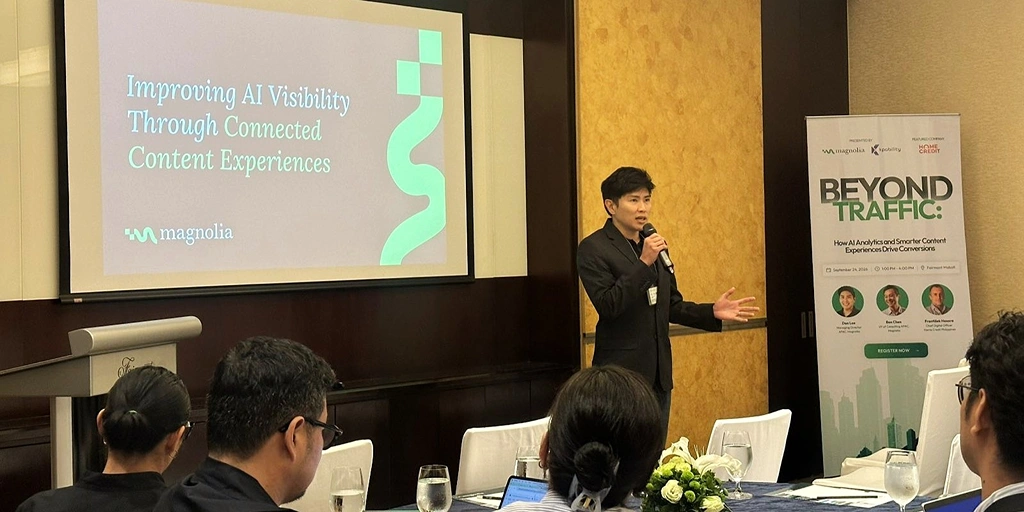
Beyond Traffic: Key Takeaways on AI Analytics, Content Experiences, and Digital Conversions
Beyond Traffic was an event hosted by Kpability and Magnolia on September 24, 2026, at Fairmont Makati, bringing…

Zoho CRM vs Odoo CRM: Which Is Better for Growing Businesses in 2026?
If you are comparing Zoho CRM and Odoo CRM, the short answer is this: Zoho CRM is the…

Odoo vs HubSpot: Which CRM Gives Growing Businesses More Value?
Odoo CRM is the better value for most growing businesses because its pricing stays predictable as teams scale…