Why Customer Conversations Break When Channels Do Not Work Together
Knect, Powered by Odoo: Why Customer Conversations Break Across Channels
Customer conversations no longer happen in a straight line. A prospect might first see your business on social media, send a message through chat, follow up by email, and expect the next reply to pick up where the last one left off.
That is now normal behavior. Customers move across channels naturally. The problem is that many businesses still handle those touchpoints as separate interactions instead of one connected conversation.
That is where customer experience starts to break. When channels do not work together, context gets lost. Replies become inconsistent. Team ownership becomes unclear. Customers repeat themselves.
Internal teams spend more time piecing together history than moving the conversation forward. What feels simple from the customer side can quickly become confusing behind the scenes.
Knect, powered by Odoo, is built around this exact challenge. It combines customer communication, lead management, and engagement into a more connected operating flow, making it easier for businesses to manage conversations across channels without losing visibility along the way.
Odoo’s own CRM, Helpdesk, Live Chat, and Marketing Automation capabilities support that connected approach by bringing communication, lead tracking, and workflow automation into an integrated system.
Why conversations break when channels are disconnected
Customers do not think in platforms. They think in outcomes. They expect your business to remember what they asked, who they spoke with, and what happens next. They do not care whether your team uses one tool for email, another for chat, and another for lead tracking.
From their perspective, it is all one relationship. But when internal systems are disconnected, that relationship feels fragmented. A customer may begin with a question on one channel, then continue on another, only to find that the second person responding has no idea what already happened.

A sales inquiry may come through social media, but it never connects properly to a follow-up process. A service conversation may sit too long because nobody has clear visibility into who owns it. Even strong teams can look disorganized when the systems behind them are not connected.
This is the real issue behind poor omnichannel engagement. It is not just about response speed. It is about continuity.
Multichannel Presence is Not the Same as Omnichannel Engagement
Many businesses are already active on several channels. They run email campaigns, manage social media inquiries, use website forms, and respond through messaging apps. That is multichannel presence.
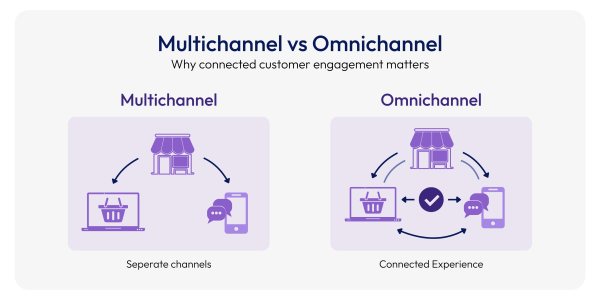
Omnichannel engagement is different. It means those channels work together. The conversation history, lead context, and next steps stay connected as the customer moves. Instead of treating each touchpoint as a fresh interaction, the business treats them as part of one journey.
That distinction matters because customers rarely stay in one place. If your business can only respond well inside isolated channels, the overall experience still feels broken.
This is also where customer relationship management becomes more practical. CRM is not just a place to store names and contact details. Done properly, it should help teams preserve context, coordinate action, and keep customer communication moving with less friction.
Odoo describes its CRM as a tool to track leads, close opportunities, and keep communication in one place, noting that incoming emails are automatically added to the pipeline and that team and customer communication can be managed from a single location.
Where businesses usually lose context
The breakdown usually starts in ordinary, everyday situations. Leads come in from different entry points. Some arrive through website forms.
Others come from Facebook, live chat, SMS, or messaging apps. If those sources feed into different workflows, teams end up managing fragments instead of journeys.
Then handoffs start to fail. One person answers the first inquiry. Another handles the next stage. A third gets involved when there is a complaint or follow-up. Without shared history, every handoff introduces the risk of delay, duplication, or inconsistent messaging.
Reporting often makes the problem worse. Many businesses can see activity inside individual tools, but not the full path from campaign to inquiry to conversation to outcome. So they know something is happening, but not how all the parts connect.
That is why disconnected messaging creates both customer-facing and internal problems. Customers feel the inconsistency. Teams feel the confusion.
Why Knect, Powered by Odoo, is a Strong Fit
Knect, powered by Odoo, makes more sense when viewed as a customer communication system, not just a traditional CRM layer. The value is not simply having customer records. The value is having a more connected way to manage conversations, lead flow, and follow through across channels.
That is also where the Odoo Foundation matters. Odoo officially supports CRM, Live Chat, Helpdesk, and Marketing Automation in ways that align with connected customer communication.
Odoo’s CRM features include live chat that can convert website visitors into leads. Its Helpdesk product supports channels such as WhatsApp, Live Chat, email, and website forms. Its Marketing Automation tools support timed, automated actions based on customer behavior or campaign interaction.
In practical terms, that means businesses can move closer to one shared view of the customer instead of relying on scattered touchpoints and manual coordination.
The role of CRM in better customer engagement
Businesses often search for CRM software examples or ask how CRM works, but the more useful question is this: Does your CRM actually help your team stay connected to the customer journey?
A relationship management system should do more than store records. It should help teams track conversations, manage next steps, and keep engagement consistent over time.
That is especially important for small and growing businesses. They may not have large teams, deep process layers, or dedicated specialists for every channel. When communication is scattered, the cost shows up quickly through missed follow-ups, duplicated effort, and weaker customer relationships.
This is one reason the benefits of customer relationship management go beyond sales reporting. Good CRM supports continuity. It gives structure to follow-ups. It improves visibility. It helps businesses create a more reliable experience across touchpoints.
Odoo’s official documentation reflects this broader role. Its CRM app focuses on lead tracking, pipelines, and activity management, while Live Chat and Helpdesk extend that into real-time interaction and support workflows.
Why Fixing This Matters Now
When conversations break, the symptoms are easy to spot.
Response times get slower. Customers repeat themselves. Teams send inconsistent replies. Leads go cold. Managers struggle to understand where momentum is being lost.
But the deeper issue is usually not effort. It is structured. Disconnected systems force teams to work harder just to maintain basic continuity. Over time, that drags down customer engagement and makes relationship management harder than it should be.
Connected communication changes that. It gives teams a clearer view of what has happened, what needs to happen next, and how customer interactions are moving across channels. It also makes automation more useful because workflows can respond to actual behavior instead of isolated events.
Odoo’s Marketing Automation documentation specifically describes dynamic campaigns with actions that occur over time based on interactions, while automated actions can also trigger changes based on user actions or time conditions.
The Takeaway
Customer conversations break across channels when the systems behind them are disconnected. That disconnect creates poor customer experiences, inconsistent follow-through, and unnecessary internal confusion. It weakens visibility, slows response times, and makes customer relationship management harder to sustain. Knect, powered by Odoo, addresses that challenge by helping businesses create a more connected way to manage customer communication. Instead of treating every inquiry as a separate event, it supports a clearer flow between conversations, lead tracking, and customer engagement.
Ready to make customer conversations more connected?
Knect, powered by Odoo, helps businesses unify conversations, lead capture, and customer engagement across channels in one practical system.
Related posts
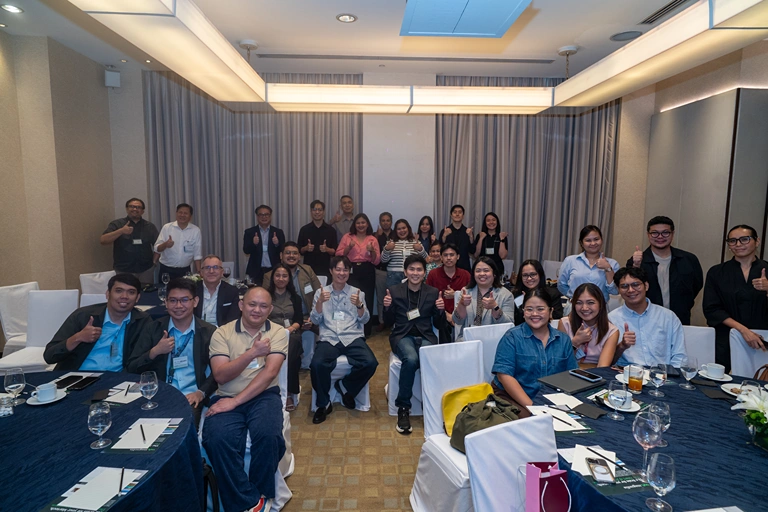
Beyond Traffic: Key Takeaways on AI Analytics, Content Experiences, and Digital Conversions
Beyond Traffic was an event hosted by Kpability and Magnolia on September 24, 2026, at Fairmont Makati, bringing…

Zoho CRM vs Odoo CRM: Which Is Better for Growing Businesses in 2026?
If you are comparing Zoho CRM and Odoo CRM, the short answer is this: Zoho CRM is the…

Odoo vs Salesforce for Mid-Sized Businesses: Which CRM Offers Better Value in 2026?
If you are comparing Odoo and Salesforce for a mid-sized business, the short answer is this: Salesforce is…